
























# Tags
#Music

Maestro John V. Sinclair Brings Berlioz’s Requiem to Steinmetz Hall
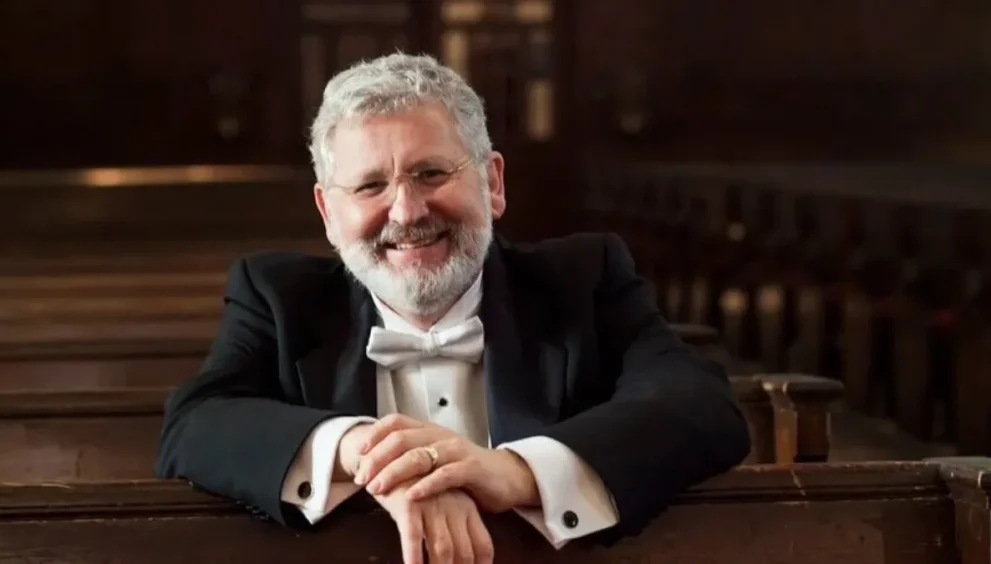
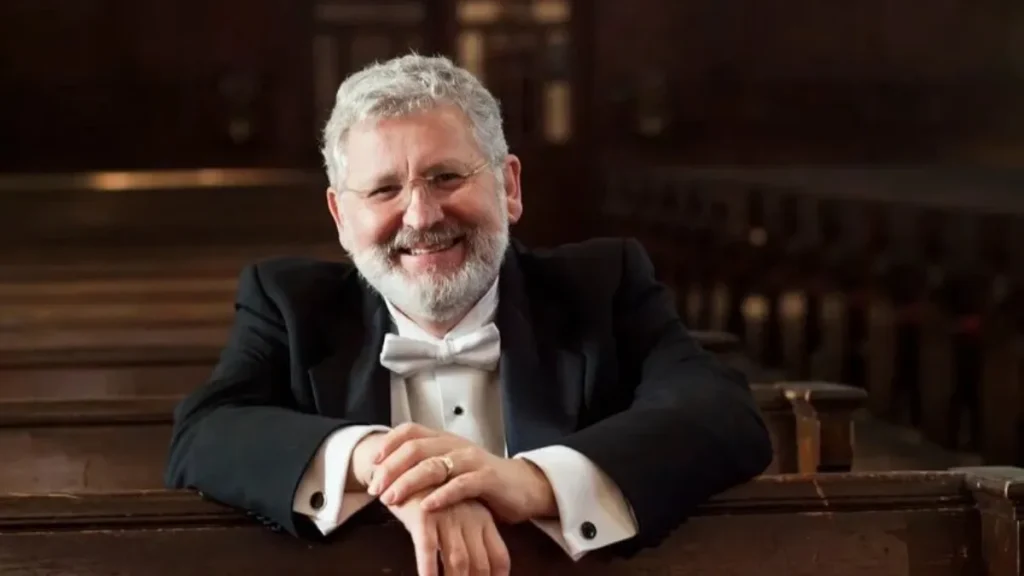
DR. John V. Sinclair sitting in a pew.

Photo by Karen Leslie Photography

Somewhere along the Panama Canal, Orlando conductor Dr. John V. Sinclair sat alone on the deck of the Queen Elizabeth, headphones on, immersed in the score of Hector Berlioz’s Grande Messe des morts.

He was preparing to conduct the 19th-century composition, better known as Berlioz’s Requiem, a work that had been on his bucket list for years.

It was a piece of music so grand in scale that it could practically shake the earth itself.

The ship had passed through the first locks of the canal, and as it crossed the lake toward the final set, Sinclair felt an unusual vibration. The ship’s captain announced that a disturbance had indeed been detected, but the engine room couldn’t explain it.

When his wife walked over and asked if he’d felt the vibration, Sinclair had a theory.

“It might just be Berlioz opening up the earth,” he recalled telling her.

A short while later, the captain returned with an explanation. They had experienced a magnitude 7.7 earthquake.

“Was it an earthquake or was it Berlioz?” Sinclair laughed.

It’s a fitting question for a work that calls for nearly 300 musicians and singers, including four brass ensembles positioned around the concert hall. And on October 25, when Sinclair brings Berlioz’s Requiem to Steinmetz Hall in Orlando, he has a suggestion for anyone planning to attend.

“I almost think they should require seatbelts,” he said.

What the Hell Was I Thinking?

Sinclair is now in his 37th season conducting the Bach Festival Society of Winter Park. He knew audiences could go an entire generation without hearing Berlioz’s Requiem performed.

Choosing it was one thing, but figuring out how to pull it off was another.

“When I first started studying this after I picked it,” Sinclair recalled, “the first thing in my mind was, what the hell was I thinking?”

The performance will bring together roughly 200 singers and 90 orchestral musicians. Twenty-six brass players will help create a sound that reaches audiences from multiple directions. And then there are the drums.

According to Sinclair, Berlioz originally called for 24 timpani. Those are the big kettledrums you see lined up at the back of an orchestra. 

Sinclair turned to three percussion specialists at UCF: Jeff Moore, Kirk Gay, and Thad Anderson. Together, they worked through the score and figured out how to play every note using 12 modern drums instead of 24.

Still, A LOT of drums. 

On top of that, Sinclair must coordinate musicians positioned throughout Steinmetz Hall, including brass players as far as 50 yards behind him.

“It’s formidable,” he said.

Listening to him describe the undertaking, I remarked on the excitement in his voice.

“I’m not sure that’s excitement or fear,” he replied.

A little of both, he conceded.

“I’m not afraid, but I am going into this with eyes wide open,” he said, then added, “This is not an easy gig, and nobody on stage gets by easy. The choral parts are hard. The instrumental parts are hard. Nobody gets by unscathed, especially the conductor.”

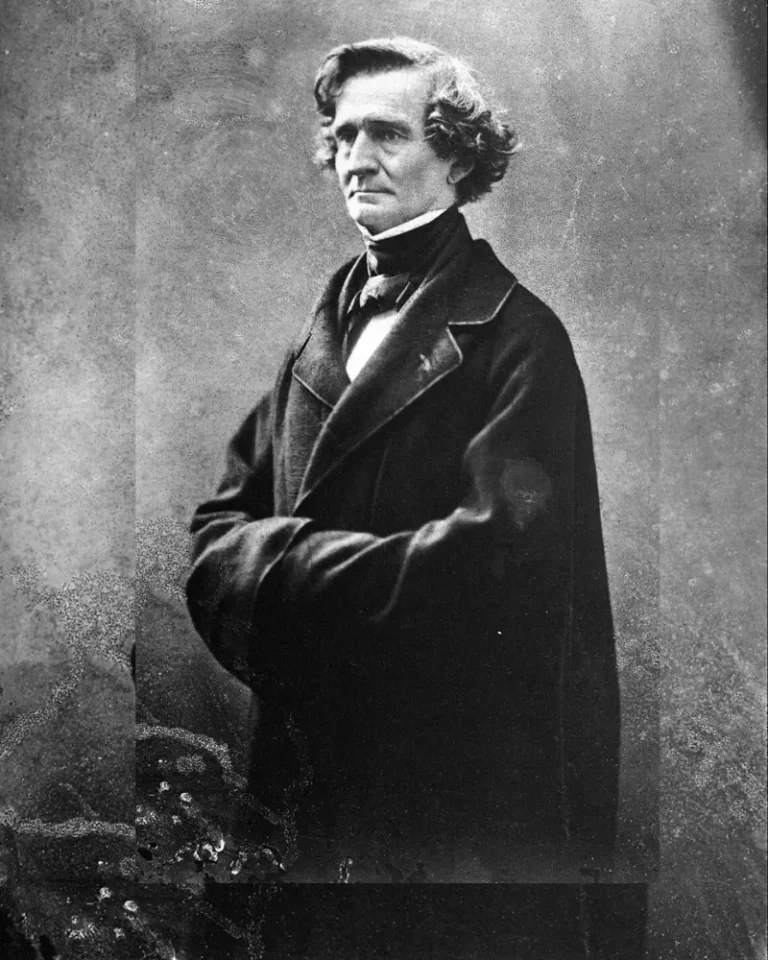
Black-and-white portrait of French composer Hector Berlioz, photographed by Félix Nadar in the 19th century.
Hector Berlioz, photographed by Félix Nadar. Public domain, via Wikimedia Commons

The Quiet Before the Thunder

Composed in 1837, Berlioz’s Requiem is based on the traditional Catholic Mass for the Dead. The music explores grief, judgment, and the hope of eternal rest.

But with nearly 300 musicians and singers performing a work about something so deeply personal, how do you keep the music intimate?

“Maintaining that emotional intimacy is the whole goal all along,” Sinclair said. “And it only becomes more difficult because of the massive forces.”

“We get the wrong idea about this. We talk about the massive forces, but Berlioz uses those massive forces judiciously,” he explained.

“There’s some movements that are scored for flutes and cellos and basses and choir,” he said. “The entire first movement, the brass section and timpani don’t even show their teeth. You don’t even know they’re there.”

“At least half of the work is serene and beautiful and lush,” Sinclair said. And then, as he put it, Berlioz “zings you.”

A March of the Zombies

That “zing” arrives in the sixth movement, the Lacrimosa.

“It’s almost like a March of the Zombies,” Sinclair said.

“You know when something is just mesmerizing and the beat just keeps going until it just kind of pounds at you forever? Well, that movement, the Lacrimosa, is eight or nine minutes of that same tempo.”

While the rhythm keeps pounding away, Berlioz is constantly changing what the audience hears.

“All of a sudden you’ve got woodwinds and a choir, and the next moment you’ve got brass and percussion and no choir. In other words, he’s just playing around with you the whole time.”

“Berlioz was experimenting with what he thought was going to be the modern orchestra,” Sinclair explained, “and he was experimenting with trying to create surround sound.”

Sinclair calls Berlioz “a master of colors,” and has an analogy he likes to share with his students.

“I told my students this the other day. Some people buy that 10- or 12-pack of crayons for colors. Well, Berlioz used the whole 144-pack with a sharpener.”

Inside of Steinmetz Hall
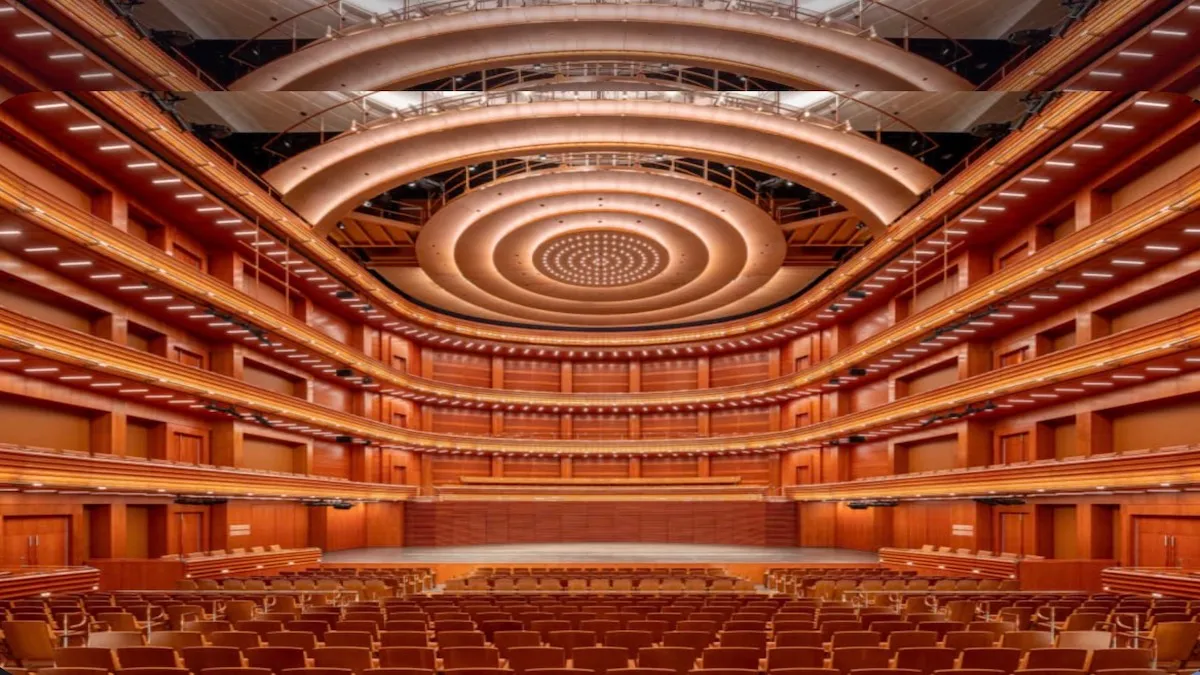
Steinmetz Hall at the Dr. Phillips Center for the Performing Arts in downtown Orlando.

The Hall That Made It Possible

Sinclair actually tried performing part of Berlioz’s Requiem about 30 years ago.

“It was a very small version on a small scale, didn’t do all the echo brass stuff. I just did a movement of something from it to get a chance to hear a little of it.”

“We didn’t have a place in town I could pull that off,” he said. “So I didn’t try to do it on the right scale.”

Today, Orlando has Steinmetz Hall, the crown jewel theater of the Dr Phillips Center for the Performing Arts, and according to Sinclair, there aren’t many places in the world where you can pull off something like this.

For the October 25 performance, the hall will use its largest stage extension. The orchestra and some of the singers will be onstage, with more singers above them. Two brass ensembles will be near the front of the hall, one on each side, and two more will be in the back corners.

“So you will have the surround sound,” Sinclair said.

But there’s another reason Steinmetz Hall matters.

“I can now hear all the things going on around me,” Sinclair said. “I don’t think I could pull this off anywhere else.”

And after all the planning, the musicians, the drums, and figuring out where everybody goes, Sinclair keeps coming back to one thing. He wants to get the music right.

“The challenge for me has been not only the musical entity, but also trying to make sure I get the scale right and not cheat any of the audience out of any of the colors and sounds that Berlioz created,” he said. “I want to make sure I’m a good ambassador for this work.”

From a Town to a City

For Sinclair, Steinmetz Hall is also a reminder of just how much Orlando has changed.

“We were a town, now we’re a city,” he said.

“We now have a plethora of arts offerings that we did not have, and Bach Festival’s been around a long time. We might be the oldest running music group in the state because this is our 92nd season.”

Sinclair remembers when Orlando didn’t have nearly as much going on.

“We were back when there wasn’t hardly anything going on,” he recalled. “It has changed and it has gotten more sophisticated, and it’s gotten more variety. I mean, everything from the cool festivals they do to the Fringe Festival, to all the various other organizations.”

“I just think the art scene’s grown up. We’ve matured.”

And after 37 seasons conducting the Bach Festival Society, I wondered what keeps him coming back.

“How can I not?” Sinclair responded. “This is in my body and my soul. This is my calling.”

Sinclair’s love of music goes well beyond the classical world. He’s a trumpet player who helped pay his way through school playing in rock bands, covering groups like Chicago and Blood, Sweat & Tears.

“There’s no snobbery here,” he said. “I love all kinds of music.”

Toward the end of our conversation, Sinclair returned to something he’d mentioned earlier. He doesn’t want people coming to Steinmetz Hall just to attend another concert. He wants them to have an experience.

“Even if you’ve never been to a classical concert, this is something like you’ve never heard before,” he said. “You might have spent your whole life going to classical concerts, and this is something you haven’t heard before.”

And he hasn’t forgotten his earlier advice.

“Bring your seatbelts,” he said. “We hope to push you back in your chair some.”

What does he hope people take home when the music is over?

“I want them to feel like they’ve heard something majestic, something to elevate our spirits,” Sinclair said. “That’s what art’s supposed to do. Art’s supposed to transport us places.”

Concert Information

Performance: Berlioz’s Requiem (Grande Messe des morts)

Presented by: Bach Festival Society of Winter Park

Date: Sunday, October 25, 2026

Time: 3 p.m.

Venue: Steinmetz Hall, Dr. Phillips Center for the Performing Arts, Orlando

Tickets: https://bach-festival-society.squarespace.com/event/berlioz-requiem-steinmetz-hall-2026

Picture of Mike Synan

Mike Synan

News | Sports | Politics

Don’t Just Read It. Live It.

Get the latest stories, rankings, and culture from Pulp City delivered straight to your inbox.

Author

Maestro John V. Sinclair Brings Berlioz’s Requiem to Steinmetz Hall

Another Grammy for Orlando?

Leave a comment

Thanks for reaching out to Pulp City Magazine.

If it’s a strong fit, we’ll reach out soon. Keep an eye on your inbox.

Want faster updates? Follow us: @pulpcitymag (IG/FB/TT) + PulpCityTV (YouTube)