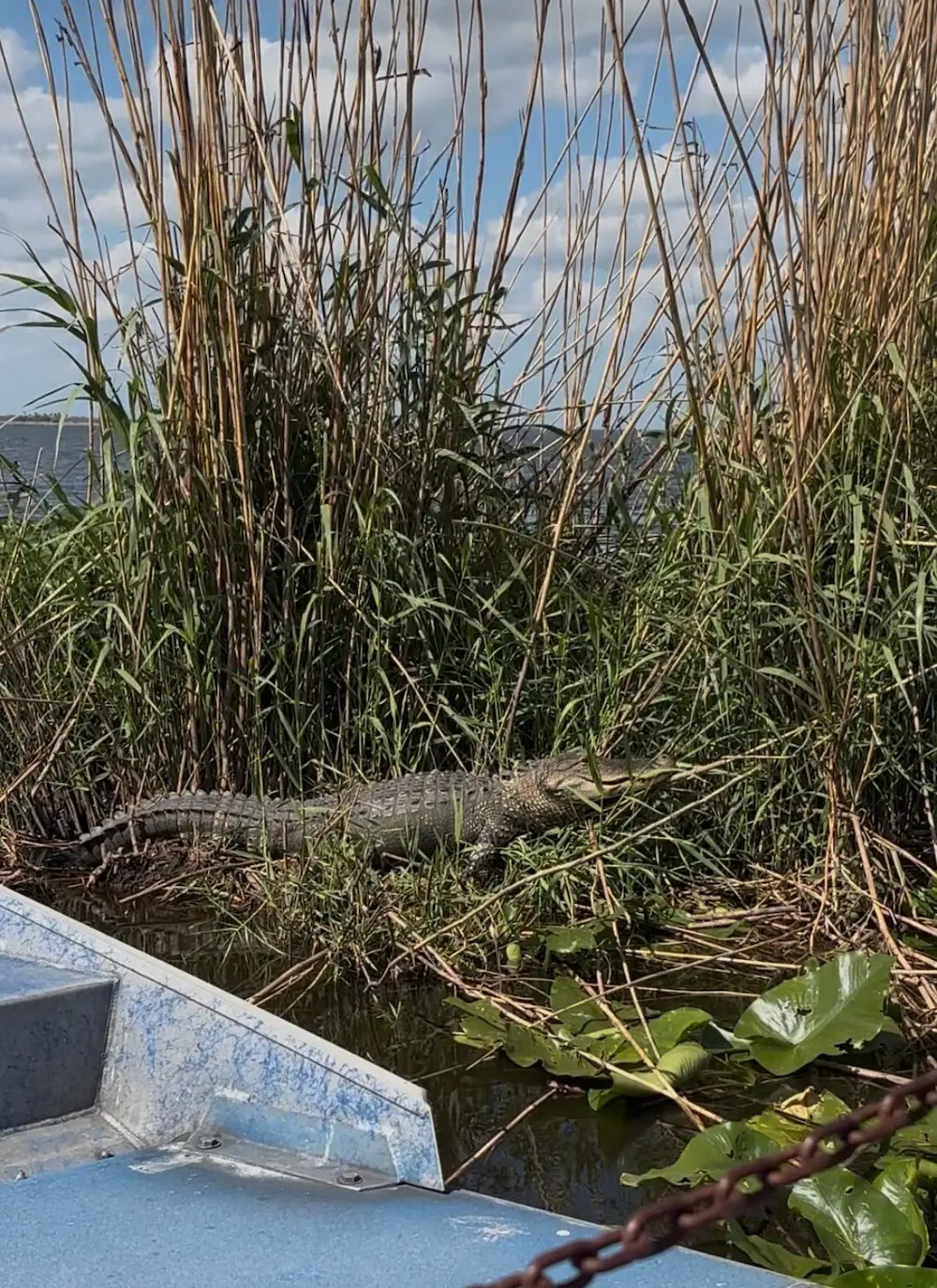
At first, they’re easy to miss, especially mid-day: a shape just beneath the surface, a pair of eyes breaking the waterline, a subtle ripple that moves differently from the rest. And then once you see one, you start seeing them everywhere.
Some linger just below the surface, barely visible, blending into the murky tones of the lake. You might even see a baby gator and turtle “cuddle puddle” stretched out on a low floating log. Others rest fully on the banks, bodies stretched out in the sun, completely still in a way that almost feels staged, until you remember they don’t need to move unless they want to. These guys don’t perform. They simply exist, and lucky for you, they are letting you right in their territory.
It changes how you look at the water, turning every ripple into something worth paying attention to. The quiet isn’t empty, it’s watchful, layered with life you can’t always see at first glance. And the longer you sit with it, the more you realize you’re the visitor here, moving through a world that’s been operating just fine without you.
Birds fill in the spaces between gator sightings: herons stepping carefully through the shallows, ospreys circling above with quiet precision, anhingas perched with their wings spread wide, as if they’re holding onto the last of the sun.
There’s something powerful about watching someone experience something for the first time. What’s familiar to you becomes extraordinary again through their eyes—every ripple in the water, every still shape along the shoreline carrying new weight. What you’ve grown up with suddenly feels alive again, met with curiosity, excitement, and a touch of disbelief.
Sitting there, I realized I’d taken something like this for granted—not carelessly, but in the way you do when it’s always been around. You stop really noticing it, stop seeing it for what it is.
Until you do—this is the kind of place that makes you stop taking Florida for granted.
There’s no script, no guarantee of what you’ll see or when. Every sighting feels earned, every turn of the boat revealing something new. It’s not just a ride; it’s an immersion that doesn’t feel manufactured.
What makes Black Hammock stand out even more is that the experience doesn’t end when you step off the boat. The property itself invites you to really lean back and sit a spell. Soak it all in.
There’s no pressure to rush off. No rigid timeline pushing you forward. You can wander along the water’s edge, watch the boats come and go, or find a quiet spot to sit and take it all in, cold drink in hand. Maybe just daydream with the sounds of the nature in the background. It’s a rare feeling to exist somewhere without feeling the pressure to move on immediately.
And then there’s the food.
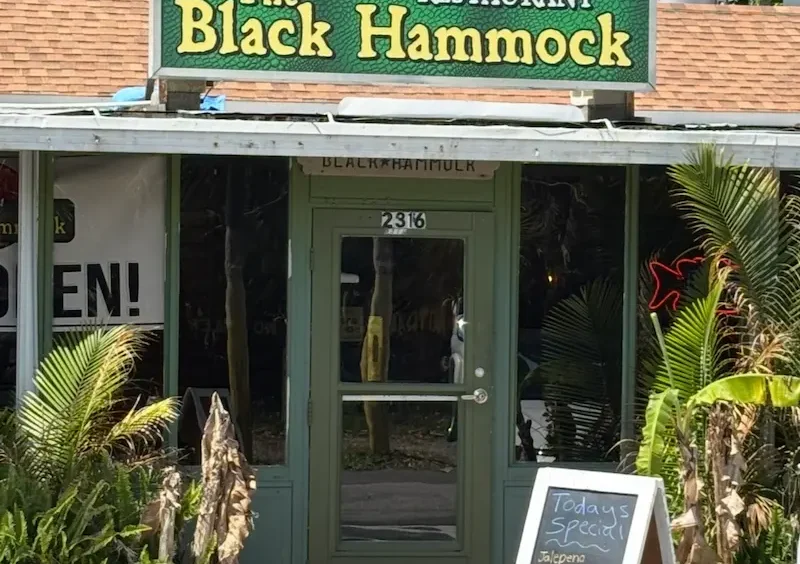
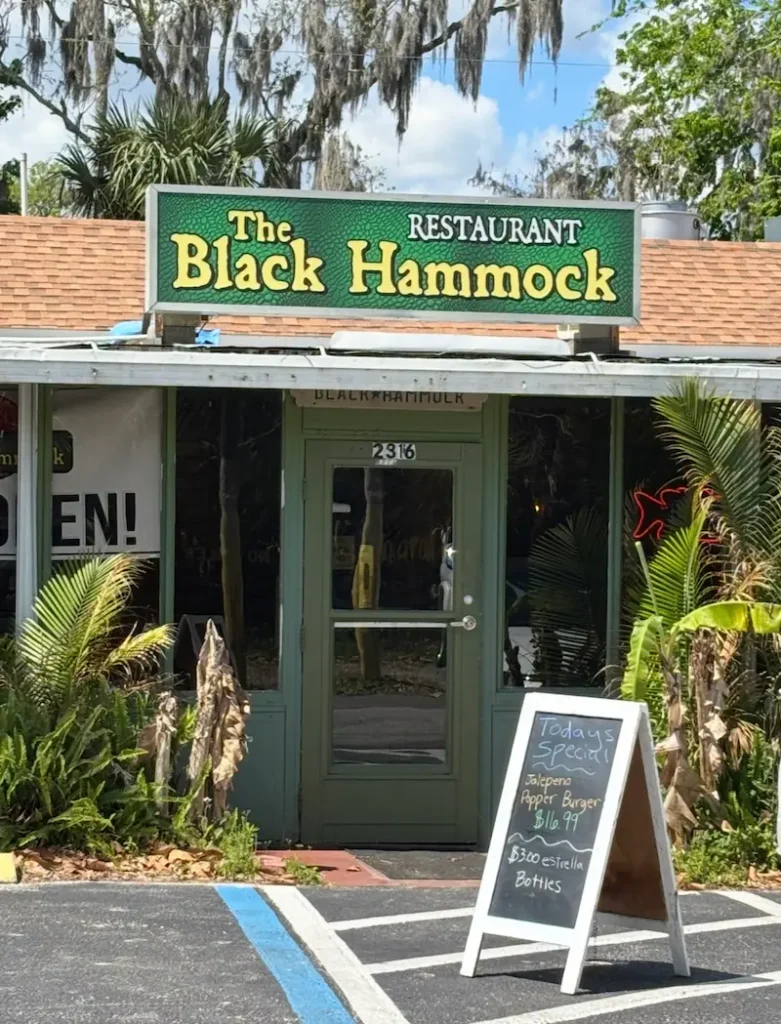
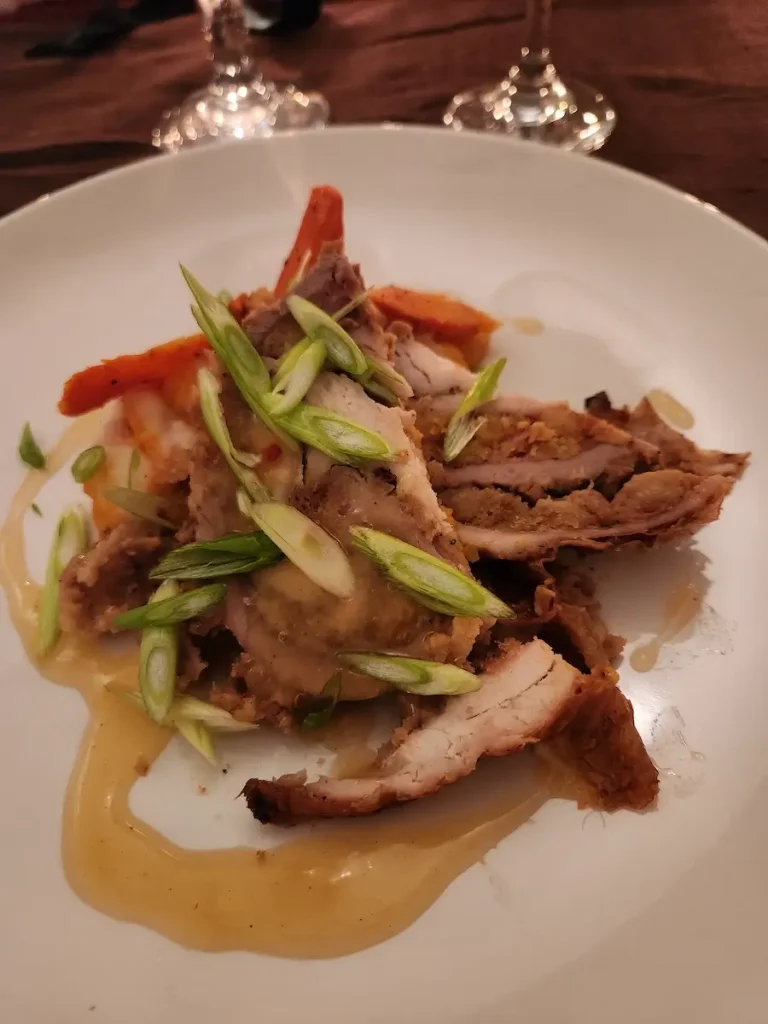
The adjoining Black Hammock Restaurant leans fully into its identity as a classic Florida fish camp diner, casual, rustic, and completely unpretentious. It doesn’t try to reinvent anything, and that’s exactly why it works.
There’s something surreally poetic about sitting down after the airboat ride, still carrying that residual energy in your body, the wind still lingering in your senses, and settling into a meal of those you just watched in their natural habitat. The menu reads like Florida comfort food done right: fried gator tail, frog legs, catfish baskets, burgers, and satisfying plates that feel earned after time out on the water. You might even spot a live baby alligator in a tank, a small but memorable reminder that the environment you just explored is still very much alive. In a surrounding that doesn’t try too hard to impress because it doesn’t need to. It’s just that good. And one of those uniquely Central Florida moments.
If you happen to be there towards the evening, the experience stretches even further at the outside Lazy Gator Bar, where the lake becomes your backdrop. Drinks in hand, conversations slow, and the light begins to shift across the water. The kind of beautiful transition you only notice when, for once, you are not in a rush.
What makes this place so compelling, especially as a half-day trip, is how effortlessly it all comes together. There’s no overplanning required. No need to map out every hour or stack reservations on top of each other (aside from grabbing your airboat tickets). Everything you need is here: adventure, food, scenery, and space to breathe, and that’s what makes it such a perfect counterbalance to the rest of Central Florida.
Theme parks are immersive but controlled. Beaches are beautiful but often crowded. Nearly everything is designed, timed, and optimized for maximum efficiency. At Black Hammock, the moments happen naturally. A ripple in the water that turns into the unmistakable shape of a baby alligator. A sudden burst of wings as a bird takes flight just feet away. The air softening, noise fading into a quietness that lets your stress slip away.
It’s a reminder that Florida isn’t just about attractions and coastlines; it’s wetlands, wildlife, and ecosystems that existed long before any tourist attractions were built. More importantly, it’s a reminder that places like this still exist and need to be preserved and thoroughly enjoyed.
By the time you leave, something feels different. You’re not drained in the way a full day at a theme park can leave you, like you need a vacation from your vacation. You’re not sunburned and sand-covered from fighting for space on a crowded beach. Instead, there’s a sense of reset. A calm that lingers a little longer than expected, and for me, there was something deeper.
A quiet satisfaction in finally doing something that felt so deeply, undeniably Floridian and sharing it with people who made it matter even more, including, as of the night of this adventure, my new fiancé.
The Black Hammock doesn’t try to be flashy because it doesn’t need to be. What it offers is something far more valuable: a chance to step away, even briefly, and experience a side of Florida that still feels untouched.
Ready to head to the Hammock? Location: 2316 Black Hammock Fish Camp Road, Oviedo.
Hours: Airboat rides run Tues.-Sun., 9 a.m.-5 p.m.; the restaurant is closed on Mondays and open 11 a.m.-8:30 p.m., Tue.-Thu., and until 9 p.m. on weekends; and the Lazy Gator Bar is open 12-11 p.m., Tue.-Sun., with extended hours to 1 a.m. on Fri. and Sat. For more information, swim on over to https://theblackhammock.com.
It might be exactly the kind of escape you didn’t realize you needed. Tell them that Jessi from Pulp City Magazine sent you.
 English