Venezuela Relief Donations Accepted at Hope CommUnity Center
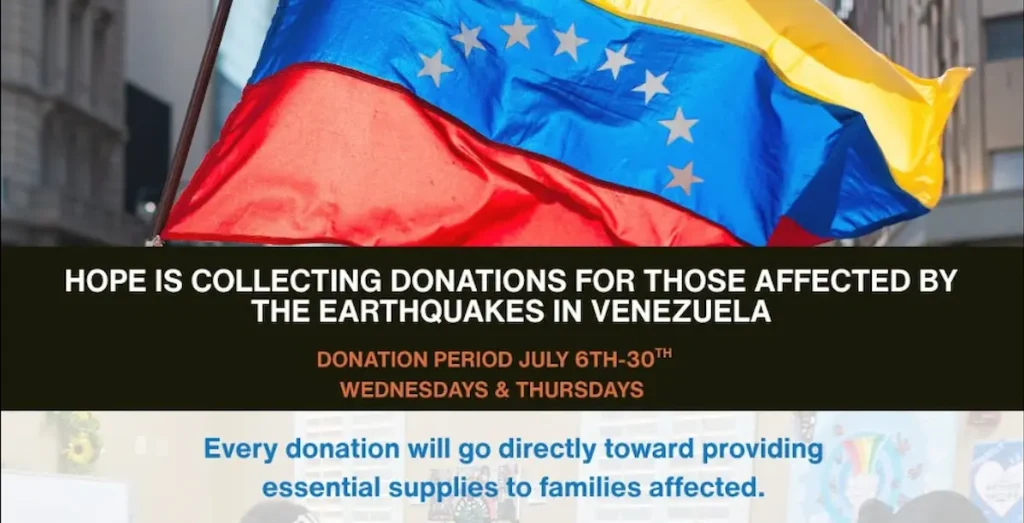
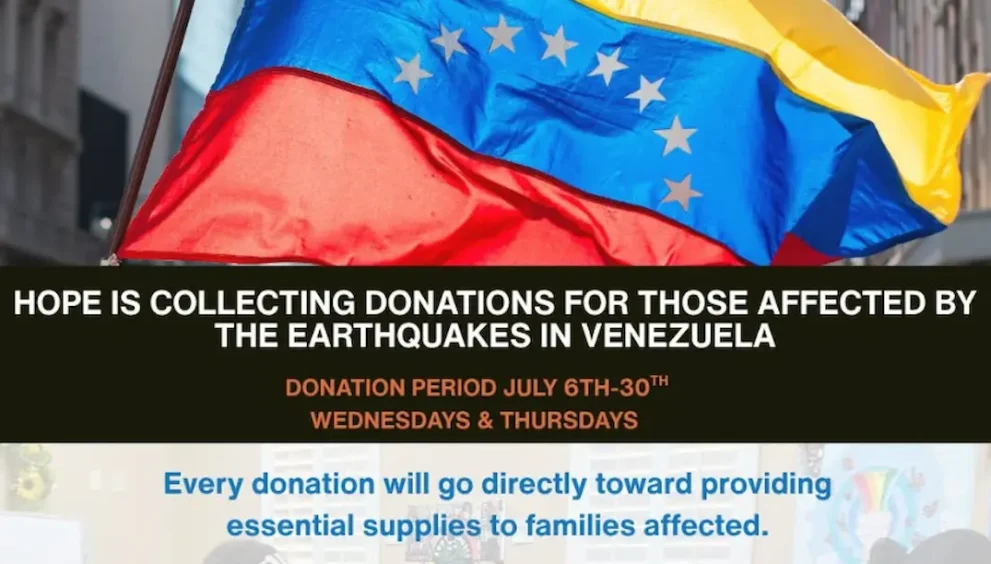
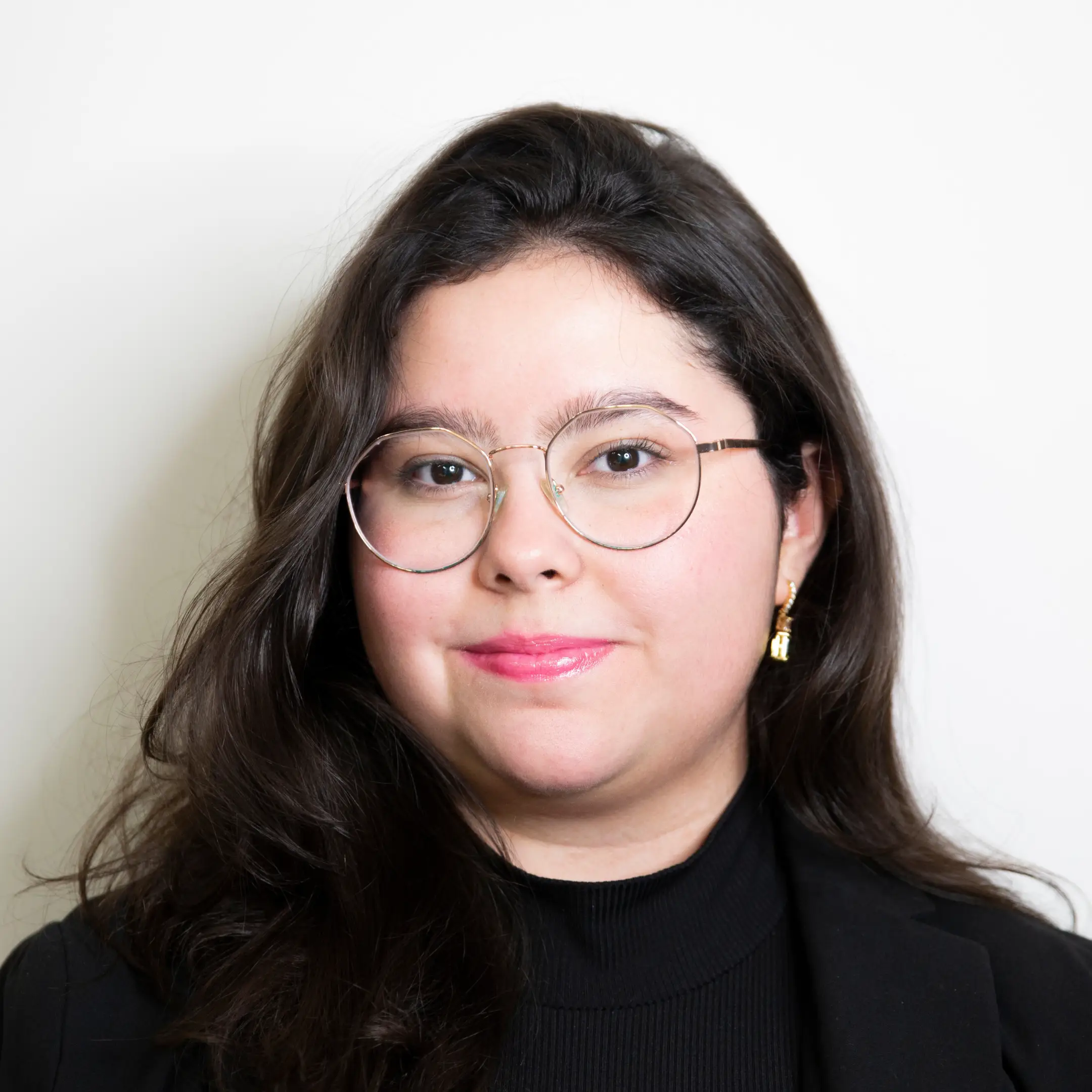
According to Tenorio, Hope CommUnity Center is accepting donations through July 30. She explained that once collected, the supplies will be transported to the Global Empowerment Mission warehouse in Miami, where they will be prepared for secure international shipment and distributed directly to communities in need across Venezuela.
Among the most urgently needed items are baby formula, diapers, children’s clothing, batteries, over-the-counter medications, sleeping bags, blankets and basic tools. “We also want people to keep in mind that things like cartons of milk and everything that can explode […] we want to avoid those kinds of things,” Tenorio added.
Mental Health Support for Venezuelans in Central Florida
As relief efforts got underway, Tenorio said she realized the disaster was affecting not only people in Venezuela, but also members of the Venezuelan diaspora who felt powerless watching events unfold from thousands of miles away, including herself.
“I think it was just really hard to watch everything unfold and feel like you couldn’t do anything, so especially [because] I haven’t been in Venezuela in like almost 10 years,” Tenorio said. “So watching everything happen, it was just like a way of reminding myself how it looked, but in the worst sense ever.”
With that in mind, Hope CommUnity Center expanded its response beyond collecting supplies by offering crisis intervention counseling sessions for Venezuelans living in Central Florida.
“It’s only one to two sessions, but it tells you how to cope with loss, grieving, or any kind of crisis that you’re undergoing,” Tenorio said. “Because we know how hard it is to be away from your country and how hard it is to be away from your family in times like this. So we also wanted to prioritize our community in the States.”
Tenorio explained that Hope CommUnity Center serves as a bridge between community members and licensed mental health professionals by connecting those seeking support with therapists who provide virtual counseling sessions. “We have to get up and continue moving on with our work, but we’re still carrying that [pain]. I think we just needed that space so people can be vulnerable and express themselves however they want to.”
How Central Floridians Can Support Victims of Venezuelan Earthquakes
Tenorio also encouraged people outside the Venezuelan community to get involved. Whether by sharing information about the disaster, reposting donation drives, volunteering to organize supplies, or contributing essential items, every act of support can make a meaningful difference, she said. “A simple thing as sharing information, educating people on what’s been happening, and donating your time and your effort, I think that’s enough.”
As the Venezuelan community continues to mourn the thousands of lives lost in the earthquakes, Tenorio believes the tragedy has also highlighted the strength and compassion that can emerge during times of crisis. “I think moments like this remind us that time is short, and that we have to be grateful to be here, and that we also have a task, and [that] is to be compassionate,” she said.
Donations can be dropped off at Hope CommUnity Center, located at 1016 N. Park Ave., Apopka. Those who would like to learn more about the organization’s work can visit the Hope CommUnity Center website.
At the time this article was published, more than 5,000 people had been confirmed dead, and more than 50,000 remained missing following the earthquakes in Venezuela.
Editor’s Note: Central Floridians can find support and additional ways to donate through the website of Casa de Venezuela, a 501(c)(3) nonprofit dedicated to supporting the Venezuelan community and the broader Latino diaspora in their journey of making Central Florida home.
 English